





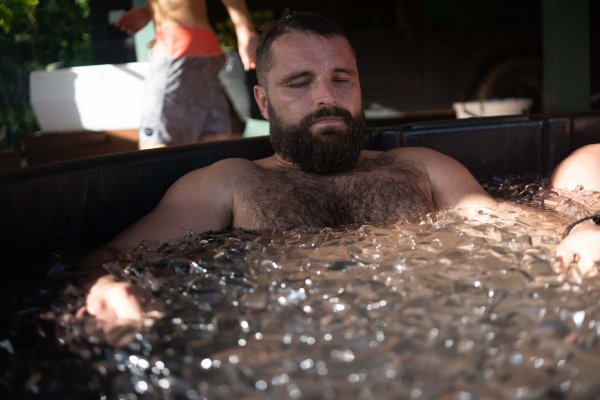
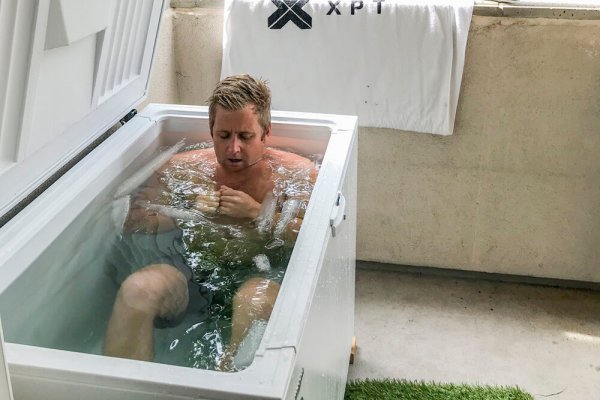
Tue Jan 29 2019 At XPT Experiences, the thing people are most fascinated by (and apprehensive) about is the ice bath. Sure, the novelty of our pool training is intriguing and, once they actually get going, challengingbut theres something about the cold that captivates their imagination and perhaps makes them a little apprehensive. Yet, cold water immersion (CWI) is a core component of the XPT lifestyle and our active Recovery pillar. Over the past 20 years, co-founders Laird Hamilton and Gabby Reece have found cycling time in the sauna with a dip in an ice bath provides an incredible boost in their recovery. This isnt just anecdotal, either. Theres a bevy of research demonstrating the benefits of getting chilly. Multiple studies found CWI significantly reduced the loss in maximal strength and delayed onset muscle soreness (DOMS) for up to 96 hours post-exercise. The skin temperature decrease resulting from ice bath immersion lowers nerve conduction velocity, which limits muscle spasms and pain sensations . The vasoconstriction that follows alters blood flow to the point that it reduces lymphatic and capillary cell permeability, which limits inflammation and minimizes swelling. And yet, for all the demonstrated advantages it provides, getting uncomfortable with ice water immersion is still something a lot of people struggle witheven though most of the time its just a mental hurdle they need to clear. Its something Dr. Andy Galpina muscle physiologist at Cal State Fullerton, XPT advisor and co-author of the bestselling book Unplugged sees frequently. Almost everyone likes getting into heat, whereas most peoples initial reaction to an ice bath is Get me out of here now! said Galpin. That means if youre presented with an either/or choice, most of us would prefer to just stay in the sauna. But the evidence is pretty clear that a hot/cold contrast is better than just heat alone. So then, the question becomes how to convince people to deal with the cold. We need a real-world solution, because just telling someone to do something isnt going to create adherence when youre not aroundif its unpleasant, a lot of people wont do it, even if they understand the benefits. Thats where combining heat and ice comes in. Do the easy thing (getting warm) first, so that once someone feels good, theyll be more willing to tolerate a short dose of cold afterwards. Getting Athlete Buy-In Galpin works with a broad range of athletes, including top level mixed martial artists and fighters. Due to the volume and intensity of their training, new modalities have to be introduced carefully and thoughtfully, so they dont get overwhelmed with yet one more thing to do. Despite the challenges, Galpin has figured out a way to utilize contrast therapy so the athletes he advises can reap the benefits of CWI, while avoiding potential objections. When fighters have been training all day, theyre worn out physically and cognitively and are hypocaloric. The last thing they want to do is jump in an ice bath, let alone stay in for several minutes. Its just one more demanding thing after theyve already been bombarded with challenges for hours on end, said Galpin. With this context in mind, I use the heat of the sauna to relax them and then coax them into the cold for 30 seconds or a minute. They can handle that. Instead of a single long contrast therapy session that might be too grueling, we do several shorter rounds of heat followed by ice. This way they get the cold-water immersion benefits and overcome their initial reservations. Galpin points to the increasingly broad adoption of contrast therapy in pro and college sports, and the inclusion of it in the modalities used by state-of-the-art facilities like the UFC Performance Center as an indicator this isnt some passing fad, but rather an effective practice thats here to stay. If you look across professional sports, a huge percentage of teams have adopted contrast therapy, he said. For example, just about every NCAA Division I college has it available in the athletic training facilities. We need to be careful to avoid the logical fallacy of authority bias, as we know that just because somethings popular doesnt mean it has value. But in the case of cold-water immersion and heat exposure, professionals who are responsible for the wellbeing of the best athletes on the planet are only going to utilize a method if its working. Such widespread adoption factors into XPTs evidence-based approach. If It Doesnt Challenge You, It Doesnt Change You The benefits of contrast therapy arent just confined to the many physical advantages of cold cold-water immersion recovery combined with heat exposure. Theres also a mental aspect that cannot be underestimated, according to XPT performance director PJ Nestler. We spend so much of our time in temperature-controlled environments that are neither too hot or too cold, said Nestler. As a result, we not only switch off the cold shock and heat shock proteins involved in immune function and other important bodily processes, but also make ourselves too comfortable. Then, when we have to perform in harsher conditions, we fall apart. XPT enables people to experience extreme heat and cold in a safe, controlled environment, which allows them to become more resilient and capable. Once youve gotten used to the initial shock of the cold, regulated your breathing, and calmed yourself down, you realize that you actually feel great once you get out of the ice bath. As the Fred DeVito adage goes, If it doesnt challenge you, it doesnt change you. In the case of cold-water immersion, the bar for challenge is set highbut so is the potential for change. Its worth consideration for any athlete, but takes tenacity and power of will to step up to the ice bath and climb in, instead of staying content in the sauna. To get yourself or your athletes, over the mindset barrier thats keeping you out of the cold, follow these steps: Per Galpins advice, start with a short dip in a hot tub to warm yourself up (10 minutes). Per Galpins advice, start with a short dip in a hot tub to warm yourself up (10 minutes). Follow this with a brief dip in the ice bath or an ice-cold shower (30-55 seconds). Follow this with a brief dip in the ice bath or an ice-cold shower (30-55 seconds). Be sure to warm up afterwards! Be sure to warm up afterwards! After a few sessions of single hot/cold exposure, build up to two, three and four cycles. After a few sessions of single hot/cold exposure, build up to two, three and four cycles. Increase the length of time you spend in the sauna and ice bath during each cycle. Increase the length of time you spend in the sauna and ice bath during each cycle. Take slow nasal inhales and exhales to keep your nervous system in a calm state. Take slow nasal inhales and exhales to keep your nervous system in a calm state. Like any new recovery methodology, this one takes time to acclimateeven more so because of the intense shock to your unprepared system. Know that with time, cold water immersion gets easier and begins to show its benefits in a major way.

Leave a comment
This site is protected by hCaptcha and the hCaptcha Privacy Policy and Terms of Service apply.