



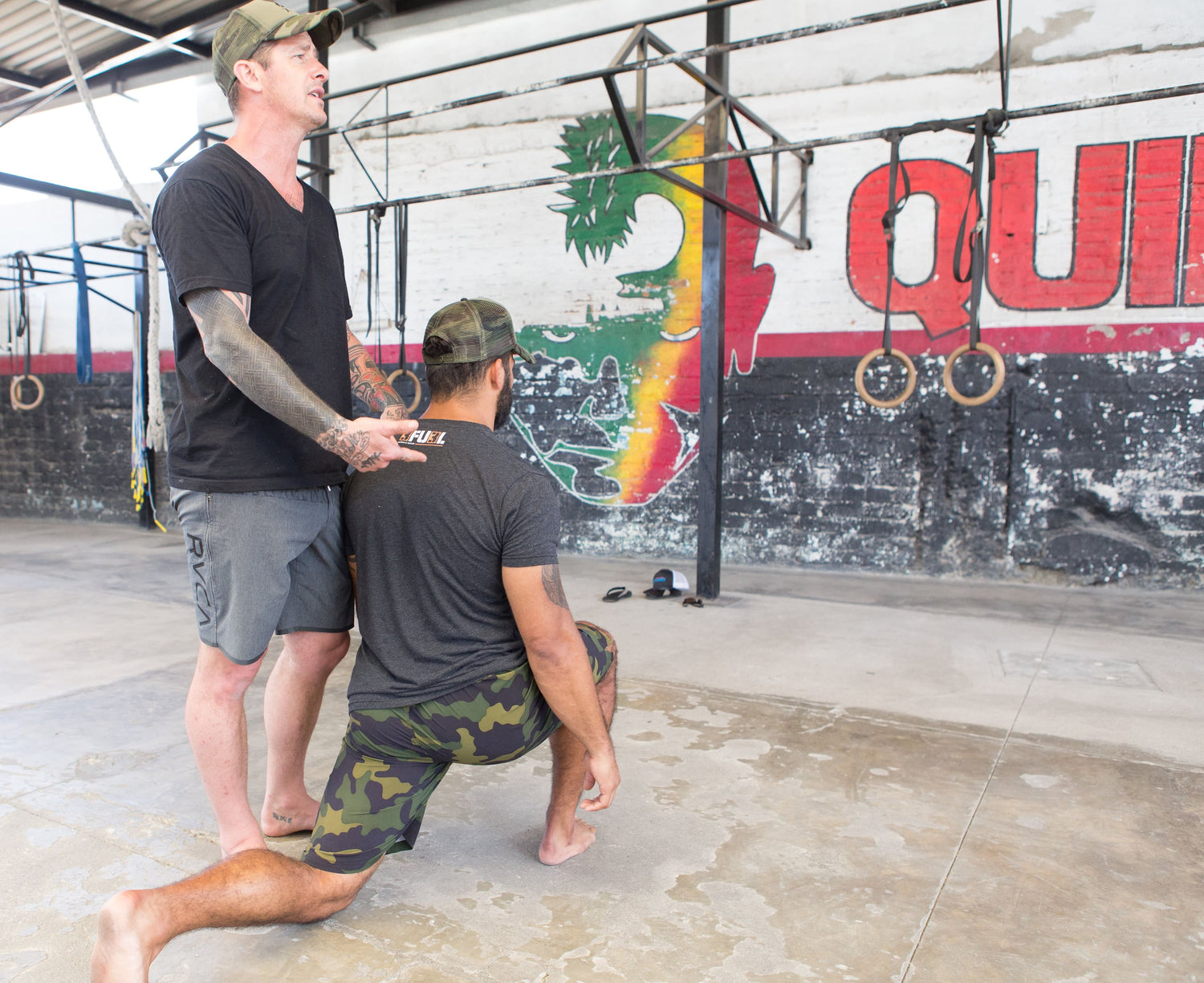
Wed May 24 2017 XPT Gym Session: Resistance Training XPT Gym Session: Resistance Training Overarching Theme: Core to Extremity Overarching Theme: Core to Extremity The spine is the center for everything. It needs to be anchored in stable condition before we can allow movement. When there is an imbalance or a weakness or instability, we are exposed or vulnerable to injury. Imbalances arise and become apparent: When fatigued or stressed When fatigued or stressed With increased load With increased load With increased volume With increased volume Under these circumstances, its easier for a breakdown in stability to arise and a fault to develop. Instead, we need to scale movement and practice breathing exercises for athletes to prevent injury. Following are some key foundational exercises to help establish stability and strength in the core and spine. Press-Up or Push-Up POSITION Keep the chin back Keep the chin back Squeeze butt Squeeze butt Spine flat Spine flat MOVEMENT Hands should be slightly behind the shoulders Hands should be slightly behind the shoulders Elbow pits facing forward Elbow pits facing forward Keep butt flexed or on Keep butt flexed or on Bring body to the ground Bring body to the ground Keep the butt on and press up from the hands Keep the butt on and press up from the hands REMINDERS Its important to keep the body stacked. Often, individuals have poor formthe head tilted forward, the spine arching, or the butt dropped and relaxed. If the upward press is difficult, compensatory position tends to arise where butt drops and lose the stacked position. Instead, under these circumstances, just drop the knees and press up with the arms. Dead Lift POSITION Turn the butt on Turn the butt on Keep belly button in Keep belly button in Chest forward Chest forward Push hips back Push hips back Keep toes pointing forward Keep toes pointing forward Keep knees out laterally, rather than pointing in Keep knees out laterally, rather than pointing in Keep shoulders back Keep shoulders back MOVEMENT As you lower, the butt will naturally turn off As you lower, the butt will naturally turn off Hamstrings will turn on for support most of the way down Hamstrings will turn on for support most of the way down Knees bend the rest of the way down Knees bend the rest of the way down Arches of the feet keep the movement grounded Arches of the feet keep the movement grounded REMINDERS This exercise requires impeccable form and attention to stability, especially if you have back problems. Proper form and breathing exercises for athletes help to engrain a pattern of keeping the back flat when bending to lift something off the floor. When fatigued or relaxed, we tend to round the back and leave ourselves vulnerable to injury. If you use two dumb-bells or a kettlebell, bring feet closer together. Youll need the extra range f motion to drop down lower to pick up the weights. For women, its extremely important to focus on keeping the knees pressed outward laterally to avoid ACL injury. Womens knees tend to turn inward due to anatomy (Q angle). Bear Crawling Quadruped POSITION Start on your knees Start on your knees Lift knees by just one inch Lift knees by just one inch Keep chin down Keep chin down Stay on the toes Stay on the toes MOVEMENT Start with all limbs on the ground, down on all fours, and crawl forward across the room Start with all limbs on the ground, down on all fours, and crawl forward across the room Keep steps very small Keep steps very small As you are crawling with your arms keep your elbow pits forward As you are crawling with your arms keep your elbow pits forward Crawl forward and backward Crawl forward and backward Rest an object (pad or cushion) on your back to make sure its stable Rest an object (pad or cushion) on your back to make sure its stable REMINDERS The entire complex of the core needs to be engaged for this exercisefrom the pelvic floor to the diaphragmatic ceiling, as well as the abdominal muscles (which serve as the walls). Engagement doesnt need to be at 100%. Even partial activation of core musculature is protective. Remember to breathe like an athlete to improve core engagement throughout the duration of your crawls. Lunge POSITION Start in standing position Start in standing position In lunge position, quad should be lateral In lunge position, quad should be lateral Back knee should be off the floor Back knee should be off the floor Forward foot flat; back foot on toes Forward foot flat; back foot on toes MOVEMENT Stand with feet hip-width apart Stand with feet hip-width apart Engage core and step forward, balancing weight on front heel Engage core and step forward, balancing weight on front heel Lower to a kneel: front thigh parallel, back knee behind the hip Lower to a kneel: front thigh parallel, back knee behind the hip Return to standing by driving from the heel Return to standing by driving from the heel Repeat with opposite leg Repeat with opposite leg REMINDERS This activity benefits daily life by supporting walking movement and joint mobility. It opens the hips and improves range of motion, which is very helpful for people with tight hip muscles. You should not be walking a tightrope or in a single straight line. Instead, keep steps/feet in line with the hips. Knee should not dip inward (toward the middle), but should stay in line. You can even try to push outward laterally to protect the ACL. Arms should remain directly above your head to stabilize the movement, despite the tendency to let them drop forward. This is also conducive to maintaining proper breathing techniques for athletes. Takeaway: Quick Daily Strength Session WARM UP 5 minutes 5 minutes Moderate intensity jumping rope or jogging Moderate intensity jumping rope or jogging Use nasal breathing only Use nasal breathing only THREE ROUNDS EACH 10 Bear crawls (forward and back) 10 Bear crawls (forward and back) 10 Deadlifts (using lighter weight, 30 seconds) 10 Deadlifts (using lighter weight, 30 seconds) Plank (top of push-up) Plank (top of push-up) 3-5 Push-ups (use attention to correct form) 3-5 Push-ups (use attention to correct form) Rest 2-3 minutes between each round Rest 2-3 minutes between each round

Leave a comment
This site is protected by hCaptcha and the hCaptcha Privacy Policy and Terms of Service apply.